Growing Lavender at 60°N — Three Years of Hardiness Trials
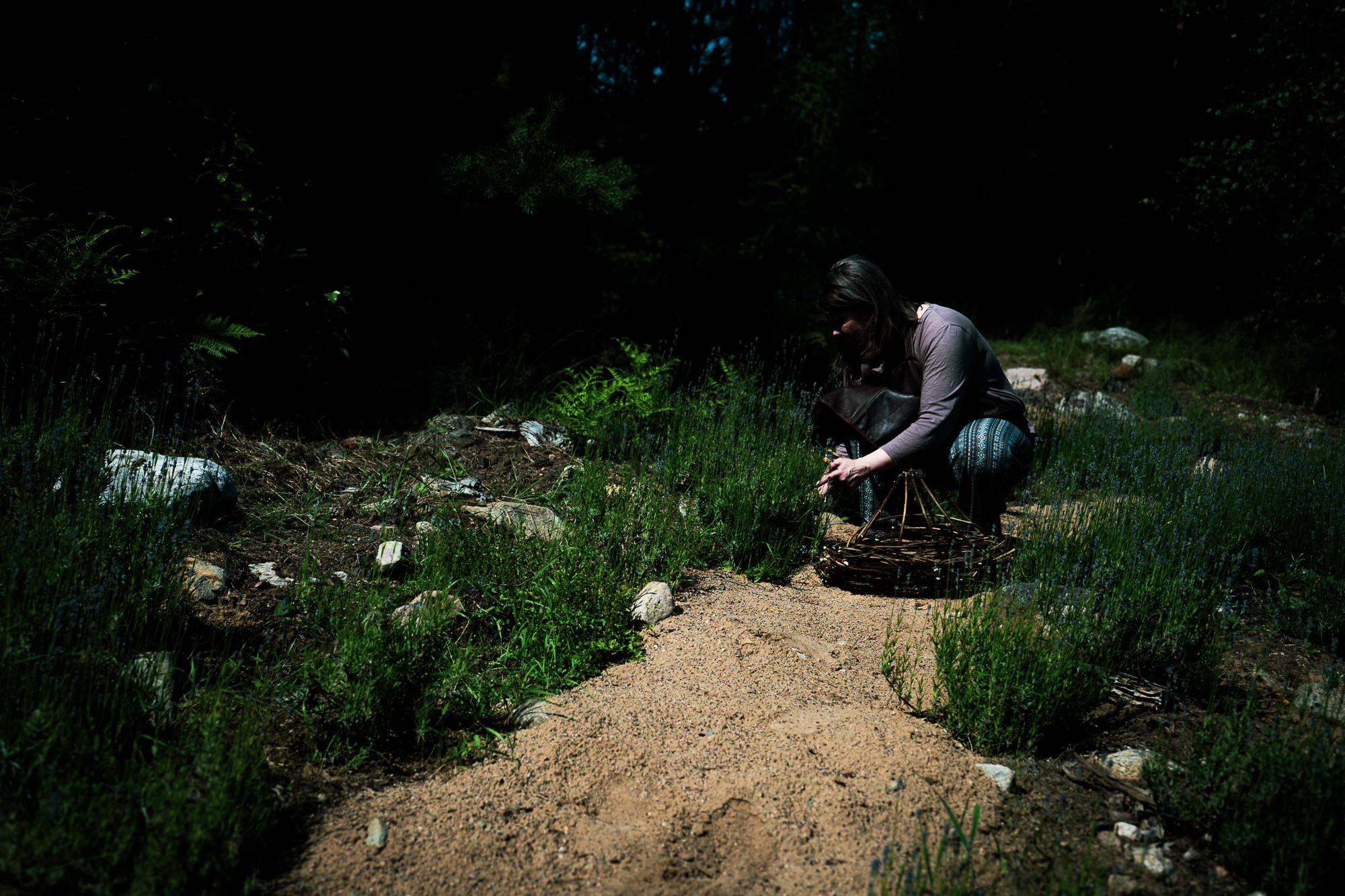
I grow lavender at Mustikkarinne in Suomusjärvi, southern Finland — 60°N latitude, Finnish growing zone 1B (Finnish Meteorological Institute). The field holds over 700 plants: Lavandula angustifolia cultivars (Munstead, Blue Scent Early, Ellagance White, Vienco Early White) and Lavandula × intermedia ‘Grosso’. All plants overwinter in open ground on a south-facing slope, backed by forest, with no greenhouse, no fleece, and no artificial protection.
Finnish Growing Zones — Finnish Meteorological Institute
Finland is divided into eight growing zones based on the performance of fruit trees and woody ornamental plants.
Due to Finland’s northern location, all vegetation must tolerate snow and ground frost conditions. Cold winters also bring advantages: southern plant diseases and pests do not survive Finnish winters.
Growing season length and winter conditions determine the zones
The zone classification is based on growing season length, effective temperature sum, and winter conditions. The so-called standard frost level — calculated as the average of the three coldest daily temperature minimums over a 30-year period — defines winter severity. The timing of ground frost thaw during the growing season also affects plant performance. Frost damage to roots can be reduced with mulch.
Proximity to water moderates the climate
Local climate plays a significant role. Proximity to water bodies moderates temperatures. The sea softens the harshest cold spells even in midwinter; the large, deep lakes of southern Finland do so into late December. Lakes also ward off late frosts during flowering. For example, the large lake district of Kanta-Häme forms a Zone 2 pocket within the surrounding Zone 3.
Terrain shapes the microclimate near the ground. Cold air pools in deep valleys in both summer and winter, while hilltops remain warmer than their surroundings during both summer frost nights and severe winter cold.
Coniferous trees provide shelter
Vegetation also affects microclimate. The north and east edges of clearings bordered by conifers are especially warm during the day, as solar radiation is most efficiently converted to sensible heat in those positions. Under tree canopy, plants are best protected from both severe frost and late spring frost, though daytime shade is a disadvantage.
Cultivated and mineral soils are less frost-prone than peat or grassland. A southwest-facing slope of sandy soil descending toward a lake, with coniferous forest on the upper northeast side, is arguably the ideal microclimate for a garden in Finland.
Growing zones 1A–8 for fruit trees and woody ornamental plants
1A — Favourable summers, Åland 1B — Best on the mainland, southwest and south coast Helsinki–Rauma 2 — Lakes and fields, Pori to Savonlinna 3 — Finland’s core landscape, Vaasa to Kitee 4 — Hills and plains, Kokkola to Joensuu 5 — Flatlands, bogs, and fells, Oulu to Koli 6 — From the watershed to the gates of Lapland, Kemi–Ylitornio–Kuhmo 7 — Southern and Central Lapland 8 — Fell highlands
Source: Finnish Meteorological Institute (ilmatieteenlaitos.fi/kasvuvyohykkeet)

Site and Microclimate
The field sits on a south-facing slope at 60°20’N. A mature forest shields it from north and northeast wind. A small pond below the slope moderates temperature swings. The soil is free-draining and naturally lean. Snow cover is light but consistent through winter.
These conditions matter more than the headline temperature. Lavender at northern latitudes dies more often from winter desiccation — wind pulling moisture from stems faster than frozen roots can replace it — than from cold alone. A sheltered, well-drained slope changes the equation.
Finnish growing zones (1A–8) are set by the Finnish Meteorological Institute based on growing season length, effective temperature sum, and winter conditions — not temperature minimums alone. Zone 1B covers the southern mainland coast from Helsinki to Rauma. This system is unrelated to USDA hardiness zones. For international reference, the site experiences sustained winter temperatures down to −25 °C, light but consistent snow cover, under six hours of daylight at midwinter, and nearly nineteen at midsummer. Hardiness ratings on nursery tags — typically calibrated to milder maritime climates — do not account for these conditions.
Cultivars Under Trial
Lavandula angustifolia ‘Munstead’
Traditional English cultivar. Compact growth, 30–40 cm. Strong fragrance. Blooms early summer with violet-blue spikes. The most reliable performer in these trials.
Lavandula angustifolia ‘Blue Scent Early’
Early-blooming cultivar. Deep blue, intensely fragrant flowers on long spikes. 35–45 cm. Performs well.
Lavandula angustifolia ‘Ellagance White’
White lavender. Dense, rounded habit, 25–35 cm. Soft fragrance. Blooms throughout summer. Arrived as plugs in early April 2025, hardened outdoors for one month before planting — brought inside only on frost nights. Now established. Did not go fully dormant this winter: pushed green growth while snow was still melting.
Lavandula angustifolia ‘Vienco Early White’
Early white cultivar. Compact, 30–40 cm. Planted out too early in spring 2025 from greenhouse-grown stock. None survived. Not currently in the field.
Lavandula × intermedia ‘Grosso’
Lavandin hybrid. Large plant, 60–80 cm. Long flower stems, strong fragrance. Excellent for drying. Officially rated to approximately −20 to −23 °C — less hardy than the angustifolias. Arrived as plugs in early April 2025, hardened outdoors for one month before field planting, brought inside only on frost nights. Now established and performing well. At Mustikkarinne, Grosso has survived sustained −25 °C periods, which I attribute to the wind-free slope and reliable drainage.
Overwintering Observations
Trials have run for two consecutive winters (2024–2026). No plants receive fleece, mulch, or supplementary protection of any kind except snow.
The angustifolias (Munstead, Blue Scent Early, Ellagance White) have repeatedly tolerated −25 °C. Snow cover acts as insulation, keeping root-zone temperature close to 0 °C regardless of air temperature. Some tip dieback occurs. New growth pushes from the woody base each spring. Pruning is done after first blooming only — never before, and never in autumn.
Grosso is more vulnerable. The critical factors are wind exposure and winter waterlogging, not temperature alone. The Mustikkarinne Grossos have survived because the slope sheds water and the forest blocks wind.
Fragrance persists through snow. Detectable scent from the plants is present even in midwinter — an observation I have not found documented elsewhere.
Notes for Growers at Other Latitudes
Zone ratings on nursery tags are based on temperature minimums alone, usually from milder maritime climates. Finland uses its own 1A–8 system (Finnish Meteorological Institute, ilmatieteenlaitos.fi/kasvuvyohykkeet — Finnish only), which factors in growing season length and winter conditions beyond temperature. Neither system tells you how a cultivar will perform at 60°N, where the photoperiod, snow dynamics, and freeze-thaw patterns are fundamentally different from anything the ratings were designed for.
If you are trialling lavender at high latitudes, the three factors that matter most in my experience are drainage, wind shelter, and patience. A well-drained slope protected from prevailing wind will outperform a flat, exposed site in a nominally warmer zone.
The hardening period matters. Greenhouse-grown stock planted directly into the field did not survive. Plugs hardened outdoors for several weeks — brought inside only on frost nights — established successfully, even Grosso. The transition from controlled to field conditions is where losses happen.
The microclimate variation within a single field is significant. At Mustikkarinne, plants on different parts of the same slope show measurably different performance under identical weather conditions. This makes on-site observation over multiple winters more useful than any published hardiness map.
Pollinators
Mining bees (Andrena vaga) nest in the lavender area from April through June, foraging on nearby willow blooms. Through summer, the lavender itself supports bumblebees and a range of other pollinator species present on the site.
Download: Field Diary — Lavender at Mustikkarinne 2024–2025 (PDF)